
The global enterprise landscape is undergoing a radical shift in how data moves across borders. For decades, the gold standard for connecting branch offices to central data centers was Multiprotocol Label Switching. It provided the stability and predictability that large-scale corporations craved. However, as we move through 2025, the rise of cloud-native applications, decentralized workforces, and the demand for instant scalability has brought Software-Defined Wide Area Networking to the forefront of the conversation.
- Understanding the Architectural Foundation
- The Financial Breakdown: Total Cost of Ownership in 2025
- Performance and Reliability: The SLA Factor
- Security in the Modern Network: SASE and Zero Trust
- 2025 Industry Use Cases: Where the Value Lies
- The Hybrid Approach: Finding the Sweet Spot
- Implementation Challenges and Hidden Costs
- 2025 Market Trends and Future Outlook
- Making the Strategic Choice
The primary question for Chief Information Officers and network architects today is no longer just about performance. It is about the financial viability and long-term return on investment. This article explores the intricate details of the financial and technical trade-offs between these two technologies to determine which path offers the most value in a modern, cloud-first economy.
Understanding the Architectural Foundation
To compare these technologies effectively, we must first understand how they operate at a fundamental level.
The Traditional Reliability of MPLS
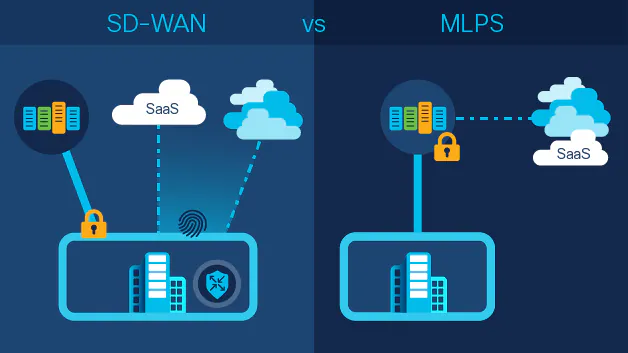
Multiprotocol Label Switching operates as a private network underlay. It is a Layer 2 or Layer 3 networking technology that directs data from one node to the next based on short path labels rather than long network addresses. This avoids complex lookups in a routing table and speeds up traffic flow.
Historically, companies preferred this method because it offered a dedicated lane for their data. Because the traffic does not travel over the public internet, it is shielded from the congestion and unpredictability of the open web. This architecture allows providers to offer strict Service Level Agreements (SLAs) regarding packet loss, latency, and jitter.
The Agility of SD-WAN
Software-Defined Wide Area Networking is an overlay technology. It decouples the network hardware from its control mechanism. By using software to manage connectivity, SD-WAN can utilize multiple types of transport simultaneously. This includes broadband internet, 5G, satellite, and even existing MPLS circuits.
The intelligence of a software-defined approach lies in its ability to identify applications and route them based on pre-defined policies. For example, a business can set a rule that video conferencing traffic should always take the path with the lowest latency, while standard email traffic can take a cheaper, higher-latency broadband connection.
The Financial Breakdown: Total Cost of Ownership in 2025
When analyzing cost-effectiveness, we must look beyond the monthly service bill. A true Total Cost of Ownership (TCO) analysis includes Capital Expenditure (CapEx), Operational Expenditure (OpEx), and the intangible costs of downtime or poor user experience.
Bandwidth Pricing and Scalability
One of the most significant cost drivers in enterprise networking is the price per megabit. In 2025, the price gap between private circuits and business broadband has widened significantly.
- MPLS Costs: Private circuits are notoriously expensive. Because they require dedicated infrastructure from a carrier, the cost is often ten to twenty times higher per megabit compared to public internet. In many regions, a 100 Mbps private circuit can cost as much as a 1 Gbps business fiber connection.
- SD-WAN Savings: By leveraging public internet links, companies can dramatically increase their available bandwidth without a linear increase in cost. Recent market data suggests that organizations transitioning to a software-defined model can reduce their connectivity spend by 30% to 70%.
Deployment and Provisioning Time
Time is money in the corporate world. Setting up a new office location with traditional private circuits can take anywhere from 60 to 120 days depending on the carrier and location. This delay can lead to lost productivity and missed business opportunities.
SD-WAN supports Zero-Touch Provisioning. This means a technician at a remote site can simply plug in a device, and the centralized controller will automatically push the configuration. New sites can be brought online in hours or days rather than months. For a growing enterprise, this agility is a massive financial advantage.
Management and Resource Allocation
Managing a traditional network often requires specialized engineers who are experts in Command Line Interface (CLI) configurations for various hardware vendors. This increases the OpEx related to specialized labor.
In contrast, software-defined solutions provide a “single pane of glass” for management. This centralized dashboard allows a smaller team to manage a global network efficiently. The automation of routine tasks like firmware updates and security patches further reduces the burden on IT staff.
Performance and Reliability: The SLA Factor
Cost-effectiveness is not just about the lowest price. It is about getting the required performance for the money spent.
Guaranteed Performance
The primary selling point for private circuits remains the SLA. When a company pays for a 10 Mbps circuit, the provider guarantees that 10 Mbps will be available with specific latency and jitter metrics. This is crucial for real-time applications like high-frequency trading or complex industrial control systems.
Resiliency Through Diversity
While an SD-WAN connection over the public internet does not have the same inherent guarantees as a private circuit, it makes up for it through redundancy. A software-defined approach can aggregate two or three different internet connections from different providers. If one provider experiences a brownout or an outage, the system automatically shifts critical traffic to the healthy links in milliseconds. This “sub-second failover” ensures that a business remains operational even when an individual ISP fails.
Security in the Modern Network: SASE and Zero Trust
Security costs are a major component of the modern IT budget. The way these two technologies handle security impacts the overall financial picture.
The Backhauling Problem
In a traditional model, branch offices often “backhaul” their internet-bound traffic to a central data center for security scrubbing. This creates a “hairpin” effect that consumes expensive bandwidth and introduces latency. As more applications move to the cloud (SaaS), backhauling becomes a massive bottleneck and a waste of resources.
Integrated Security and SASE
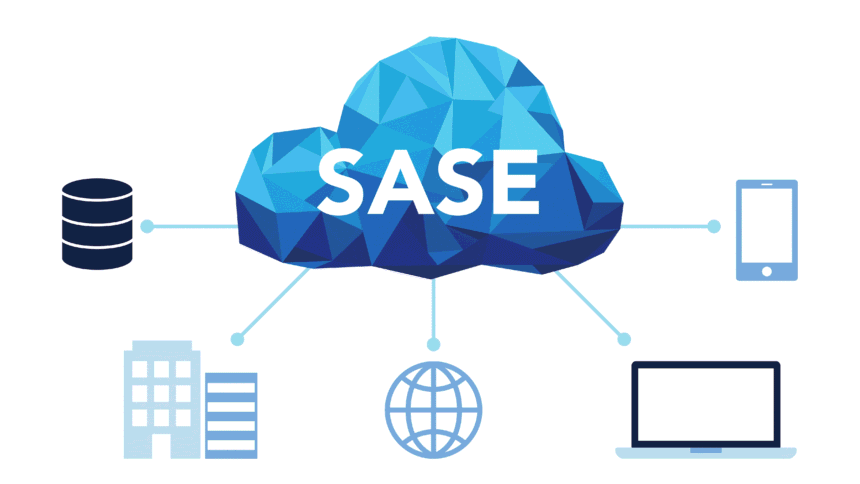
Modern software-defined solutions are increasingly being integrated into a Secure Access Service Edge (SASE) framework. This convergence of networking and security allows for:
- Integrated Firewalls: Many edge devices now include Next-Generation Firewall (NGFW) capabilities.
- Zero Trust Network Access (ZTNA): This ensures that users only have access to the specific applications they need, regardless of their location.
- Cloud-Delivered Security: Security policies are enforced at the edge or in the cloud, eliminating the need for expensive backhauling.
By consolidating networking and security into a single vendor or platform, enterprises can reduce the number of separate appliances they need to purchase and maintain, leading to significant hardware and licensing savings.
2025 Industry Use Cases: Where the Value Lies
Different sectors see different levels of cost-effectiveness based on their specific operational needs.
Banking and Financial Services (BFSI)
Financial institutions require the highest level of security and uptime. In 2025, many banks are adopting a hybrid model. They keep private circuits for their core banking transactions while using software-defined overlays to manage their growing fleet of ATMs and remote kiosks. This allows them to maintain the reliability of private links for critical data while using cheaper broadband for general office traffic.
The Retail Sector
Retailers with hundreds or thousands of locations are the biggest winners in the software-defined shift. A retail chain can save millions annually by replacing expensive private circuits with a combination of business fiber and 5G at each store. The ability to deploy new stores quickly during peak seasons provides a competitive edge that is hard to quantify but easy to see on the balance sheet.
Healthcare and Telemedicine
With the explosion of remote diagnostics and high-resolution imaging, healthcare providers need massive bandwidth. Moving large MRI files over an MPLS circuit would be prohibitively slow and expensive. SD-WAN allows clinics to use high-speed internet to move large data files while ensuring that voice and video calls for telemedicine are prioritized and protected.
The Hybrid Approach: Finding the Sweet Spot
It is a common misconception that choosing a network architecture is an “all or nothing” decision. In 2025, the most cost-effective strategy for many mid-to-large enterprises is the Hybrid WAN.
A hybrid strategy involves:
- Retaining MPLS for Critical Paths: Keeping private circuits for connections between core data centers where low latency is non-negotiable.
- Layering SD-WAN on Top: Using software-defined controllers to manage both the private circuits and new, high-speed internet links.
- Dynamic Traffic Steering: Automatically moving less-sensitive traffic (like guest Wi-Fi or public cloud access) to the cheaper internet links while reserving the private circuit for mission-critical workloads.
This approach offers a gradual migration path, allowing companies to let their expensive private circuit contracts expire over time rather than paying high early-termination fees.
Implementation Challenges and Hidden Costs
While the cost savings of a software-defined transition are real, IT leaders must be aware of potential “hidden” expenses:
- Initial Hardware Investment: Upgrading edge routers at 500 locations can require a significant upfront capital outlay.
- Staff Retraining: While the new systems are easier to manage, the initial learning curve for a legacy-trained team can lead to temporary productivity drops.
- Software Licensing: Most software-defined solutions are sold as a subscription. Companies must factor in the ongoing cost of these licenses over a 3 to 5 year period.
2025 Market Trends and Future Outlook
As we look toward the end of the decade, several trends are further shifting the cost-benefit analysis.
The Rise of Network as a Service (NaaS)
In 2025, many enterprises are moving away from owning any network hardware at all. Instead, they are consuming network capacity through a subscription model known as Network as a Service. This shifts the entire network cost from CapEx to OpEx, providing financial flexibility that appeals to modern CFOs.
AI-Driven Networking (AIOps)
Artificial Intelligence is now being used to predict network failures before they happen. AI-driven software-defined controllers can analyze vast amounts of data to identify a degrading cable or a failing ISP. By proactively shifting traffic, companies avoid the massive costs associated with unplanned downtime.
5G as a Primary Transport
The reliability of 5G has improved to the point where many businesses are using it as a primary connection for smaller branch offices. In areas where digging for fiber is too expensive, 5G provides a cost-effective, high-speed alternative that integrates seamlessly into a software-defined architecture.
Making the Strategic Choice
The decision between SD-WAN and MPLS is no longer a simple technical comparison. It is a strategic financial decision that impacts an organization’s ability to innovate and compete.
For organizations that are heavily invested in the cloud, have many distributed locations, and require the agility to scale rapidly, SD-WAN is clearly the more cost-effective choice. The ability to leverage multiple transport types, integrate security through SASE, and centralize management provides a level of ROI that traditional private circuits simply cannot match.
However, for organizations with highly centralized data centers and extreme sensitivity to latency, a hybrid approach remains the most prudent path. By combining the rock-solid reliability of private circuits with the flexibility and cost-savings of software-defined overlays, businesses can create a network that is both high-performing and fiscally responsible.
The key to maximizing cost-effectiveness is a thorough audit of current traffic patterns, application requirements, and future growth plans. In the fast-moving digital economy of 2025, a rigid network is an expensive network. Flexibility is the ultimate currency.