
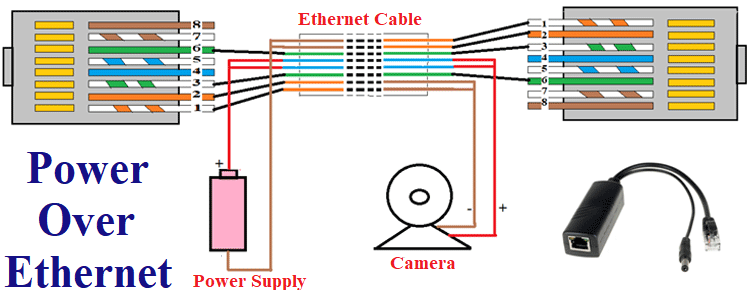

The landscape of network infrastructure has shifted dramatically in the last five years. As we move through 2025 and look toward 2026, the convergence of data and power onto a single cable is no longer just a convenience. It is a strategic necessity for enterprise environments, industrial automation, and smart building management. The era of low-wattage IP phones being the primary driver for PoE is over. Today, we are witnessing a massive surge in demand for high-wattage Power over Ethernet (PoE) implementations capable of supporting devices that require 60W, 90W, or even up to 100W of continuous power.
- The Evolution of Power: Understanding the 802.3bt Standard
- Critical Use Cases Driving High-Wattage PoE Adoption
- 1. Smart Building LED Lighting
- 2. Advanced Physical Security Systems
- 3. Digital Signage and Thin Clients
- 4. Industrial Internet of Things (IIoT)
- Infrastructure Considerations: Cabling Matters
- Power Sourcing Equipment (PSE): Switches and Injectors
- Safety and Installation Best Practices
- Future Outlook: Beyond 2026
- Power over Ethernet
This shift is driven by the IEEE 802.3bt standard, often referred to as PoE++ or 4-Pair PoE, which has unlocked a new tier of possibilities for network architects and facility managers. From pan-tilt-zoom (PTZ) security cameras with integrated heaters to entire LED lighting grids and thin client workstations, the Ethernet cable is becoming the universal power cord of the digital age.
In this comprehensive analysis, we will explore the technical requirements, strategic applications, and infrastructure considerations for deploying high-wattage PoE in 2025 and 2026.
The Evolution of Power: Understanding the 802.3bt Standard
To understand where we are going, we must look at the foundation. The progression from the original 802.3af (15.4W) to 802.3at (30W) served the industry well for over a decade. However, the limitation of 30 watts became a bottleneck as IoT devices became more powerful and feature-rich.
The introduction and widespread adoption of IEEE 802.3bt has changed the game. This standard introduces two new types of PoE: Type 3 and Type 4.
Type 3 PoE (60W)
Type 3 PoE allows for up to 60 watts of power to be injected by the Power Sourcing Equipment (PSE). After accounting for cable loss over a standard 100-meter run, the Powered Device (PD) is guaranteed to receive at least 51 watts. This tier is critical for next-generation wireless access points, including Wi-Fi 6E and Wi-Fi 7 units that require significant power to drive multiple radios and high-speed processing.
Type 4 PoE (90W-100W)
Type 4 is the heavy lifter of the modern network. It pushes the physical limits of twisted-pair copper cabling by delivering up to 90 watts (and in some proprietary implementations, nearly 100 watts) from the switch. The endpoint device receives approximately 71.3 watts. This level of power delivery is achieved by utilizing all four pairs of wires inside the Ethernet cable, rather than just two pairs as seen in older standards.
By energizing all eight conductors, Type 4 PoE reduces the resistance in the cable, which improves efficiency. However, pushing this amount of current through data cabling introduces new challenges regarding heat dissipation and arc suppression that network engineers must address in their designs for 2025 deployments.
Critical Use Cases Driving High-Wattage PoE Adoption
The demand for high-wattage PoE is not theoretical. It is being driven by specific, high-value applications that rely on the stability and reach of wired Ethernet.
1. Smart Building LED Lighting
One of the most rapidly growing sectors in 2025 is PoE-based LED lighting. In a traditional setup, lighting requires high-voltage electrical cabling (120V/240V) run by licensed electricians, overlaid with a separate control network. PoE lighting collapses these two infrastructures into one.
High-wattage PoE allows for daisy-chaining multiple LED fixtures or powering high-lumen industrial bays. Beyond simple illumination, these fixtures often serve as sensor hubs. They collect data on room occupancy, temperature, and humidity, feeding this information back to the Building Management System (BMS) over the same Ethernet connection. This integration drives significant energy savings and operational efficiency, making it a favorite for LEED-certified commercial real estate projects.
2. Advanced Physical Security Systems
The security camera market has evolved far beyond static 1080p sensors. Modern surveillance requires 4K and 8K resolution, onboard AI processing for facial recognition, and mechanical motors for PTZ functionality.
When you add environmental controls to the mix, the power budget skyrockets. A PTZ camera mounted on a building exterior in a cold climate requires heaters and blowers to prevent lens fogging and mechanism freezing. These heaters are power-hungry resistive loads. Standard PoE+ (30W) is often insufficient to run the camera, the motors, the AI processor, and the heater simultaneously. Type 4 PoE (90W) provides the necessary headroom to ensure these mission-critical assets remain operational during extreme weather events.
3. Digital Signage and Thin Clients
Retail and hospitality sectors are increasingly turning to PoE to power digital signage and Point of Sale (POS) kiosks. Running a separate power outlet behind a wall-mounted display is often expensive and requires permits. With high-wattage PoE, a single Cat6a cable can drive a 40-inch LED display and the media player behind it.
Similarly, enterprise office spaces are moving toward Virtual Desktop Infrastructure (VDI). Thin clients, which are small computers that connect to a central server, can now be powered entirely over Ethernet. This simplifies desk cable management and allows IT administrators to remotely power cycle a frozen workstation without sending a technician to the desk.
4. Industrial Internet of Things (IIoT)
In manufacturing environments, the reliability of Wi-Fi is often challenged by electromagnetic interference. Hardwired PoE connections are preferred for critical sensors, actuators, and Human Machine Interfaces (HMIs).
Industrial automation in 2025 sees the deployment of “Cobots” (collaborative robots) and complex machine vision systems. These devices require high bandwidth for video data and substantial power for operation. High-wattage PoE switches, often ruggedized for harsh environments (DIN-rail mounted), are becoming standard components in factory control panels.
Infrastructure Considerations: Cabling Matters
The most common mistake organizations make when upgrading to high-wattage PoE is neglecting the passive infrastructure. You cannot simply plug a 90W switch into 15-year-old cabling and expect stability. The physics of heat and resistance play a major role at these power levels.
The Necessity of Cat6a
For any deployment involving Type 3 or Type 4 PoE, Category 6a (Cat6a) cabling is the recommended standard. Cat6a cables typically utilize thicker copper conductors (23 AWG) compared to older Cat5e (24 AWG or 26 AWG).
The thicker conductor offers lower DC resistance, which means less power is lost as heat during transmission. This is crucial when you are pushing nearly 100 watts over a distance of 100 meters. Furthermore, Cat6a is designed to support 10 Gigabit data speeds, ensuring that the infrastructure installed today will not become a bottleneck for data-intensive applications like Wi-Fi 7 backhaul or uncompressed 4K video streams.
Thermal Management in Cable Bundles
Heat is the enemy of network performance. When electric current flows through a wire, it generates heat. In a single cable hanging in free air, this heat dissipates easily. However, in enterprise environments, cables are often bundled tightly together in trays or conduits.
When you have a bundle of 48 or 96 cables, all carrying 90W loads, the cables in the center of the bundle have no way to dissipate their heat. This causes the temperature of the copper to rise. As temperature rises, resistance increases, leading to further signal degradation (insertion loss).
In extreme cases, the heat can exceed the temperature rating of the cable jacket (typically 60°C, 75°C, or 90°C). The National Electrical Code (NEC) has introduced specific guidelines (Article 725 and 840) regarding ampacity in cable bundles. Network designers must calculate the bundle size to ensure safety. Using shielded cabling (F/UTP or S/FTP) can help, as the metallic shield acts as a heat sink to distribute thermal energy more evenly.
Copper Clad Aluminum (CCA) Warning
A critical warning for procurement teams: strictly avoid Copper Clad Aluminum (CCA) cables. These are cheaper alternatives where an aluminum core is coated with a thin layer of copper. While they may pass basic continuity tests, aluminum has significantly higher resistance than copper.
In high-wattage PoE applications, CCA cables can overheat dangerously, creating a fire hazard. They are not compliant with TIA or ISO standards for PoE usage. Always verify that your cabling is 100% solid bare copper, especially for critical infrastructure supporting 90W devices.
Power Sourcing Equipment (PSE): Switches and Injectors
Selecting the right power source is just as important as the cabling. In 2025, network administrators have to balance power budgets more carefully than ever before.
Managed PoE Budgets
A 48-port switch typically does not have enough power supply capacity to deliver 90W to every single port simultaneously. That would require a massive power supply unit (PSU) delivering over 4000 watts, which is impractical for standard rack deployments.
Instead, switches have a total “PoE Budget.” For example, a switch might offer 90W per port capability but have a total budget of 740W or 1500W. This means you can power a few high-wattage devices, but not all ports at maximum load.
Advanced managed switches in 2025 utilize intelligent power management. They prioritize critical ports (like the CEO’s videophone or the front door security camera) and will shed power to lower-priority ports if the budget is exceeded. It is vital to calculate the total expected load of all PDs before purchasing the hardware.
Active vs. Passive Injectors
When a switch upgrade is not feasible, PoE injectors (midspans) are used to add power to a specific line. It is crucial to distinguish between “Active” and “Passive” injectors.
Active injectors (802.3bt compliant) communicate with the device before sending high voltage. They perform a “handshake” to determine how much power the device needs and if it is safe to send power.
Passive injectors send raw voltage down the line constantly. If you accidentally plug a passive 90W injector into a non-PoE device (like a laptop’s standard ethernet port), you risk frying the network card. For high-wattage enterprise deployments, always specify active, compliant injectors to protect your equipment.
Redundancy and UPS Integration
As PoE devices take on critical roles (lighting, security, access control), the network closet becomes a utility room. If the switch loses power, the lights go out and the cameras stop recording.
Designing for 2025 requires robust Uninterruptible Power Supply (UPS) systems. Network architects must calculate the run-time required during an outage. Since the switch is now powering 50 devices, the load on the UPS is significantly higher than when it was just powering the switch silicon. Many organizations are moving to lithium-ion based UPS solutions for better energy density and longer lifespans compared to traditional lead-acid batteries.
Safety and Installation Best Practices
Working with 90W or 100W PoE brings the technology closer to the realm of traditional electrical work. While the voltage (typically 54V-57V DC) is still considered “low voltage” and safe to touch in most scenarios, the current is high enough to cause physical damage to hardware if mishandled.
Spark Gap and Arcing
One of the unique challenges of high-wattage PoE is the potential for arcing when a patch cord is unplugged. If a device is drawing a full 90 watts and a technician yanks the cable out of the jack, an electrical arc can form between the plug and the jack contacts.
While this arc is small, over time it causes pitting and carbon buildup on the gold-plated contacts. Eventually, this leads to a poor connection and data errors.
To mitigate this, high-quality jacks and patch panels designed for 4-pair PoE feature “arc-preventing” geometry. They ensure that the point where the arc occurs during disconnection is separate from the point where the electrical contact rests during operation. When specifying connectivity hardware for 2025 projects, ensure that the datasheet explicitly mentions compliance with IEC 60512-99-001 or IEC 60512-99-002, which test for engaging and separating connectors under electrical load.
Link Layer Discovery Protocol (LLDP)
For 802.3bt devices, hardware negotiation is often fine-tuned using Link Layer Discovery Protocol (LLDP). This is a Layer 2 protocol that allows the switch and the device to advertise their identity and capabilities.
Through LLDP, a device can request power in very specific increments (e.g., requesting exactly 62 watts). This allows the switch to allocate its power budget more precisely, rather than reserving a full 90W block for a device that only needs 60W. Ensuring your switch configuration has LLDP enabled and properly configured is a key step in optimizing high-wattage deployments.
Future Outlook: Beyond 2026
As we look further ahead, the PoE landscape continues to innovate. Two key trends are emerging that will sit alongside high-wattage 4-pair PoE.
Single Pair Ethernet (SPE)
While 802.3bt pushes for more power and speed over 4 pairs, Single Pair Ethernet (SPE) is moving in the other direction. It uses just one pair of copper wires to deliver data and lower levels of power (PoDL – Power over Data Lines) over much longer distances, potentially up to 1 kilometer.
SPE is set to revolutionize the Operational Technology (OT) space, replacing legacy serial connections in building automation and industrial sensors. In 2026, we expect to see “Hybrid” switches that offer standard 4-pair 90W ports for cameras and Wi-Fi APs, alongside SPE ports for thousands of small building sensors.
Fault Managed Power Systems (Class 4 Power)
New safety standards are emerging for “Fault Managed Power” (often called Packet Energy Transfer or Digital Electricity). This technology monitors the line thousands of times per second. If it detects a human touch or a short circuit, it cuts power instantly. This allows for much higher voltages and power levels (potentially up to 2000W) to be transmitted over thin gauge wiring safely. While not strictly “PoE” in the Ethernet sense, this technology will likely compete with or complement PoE lighting systems in large venues like stadiums and airports.
Power over Ethernet
Power over Ethernet in 2025 and 2026 is a robust, mature technology that has graduated from a niche convenience to a backbone utility. The move to high-wattage support via IEEE 802.3bt enables a convergence of IT and facilities infrastructure that saves money, improves energy efficiency, and simplifies management.
However, success in this new era requires a higher level of diligence. It demands high-quality Cat6a cabling, careful thermal planning, sophisticated power budgeting, and adherence to updated safety standards. For the network professional, mastering high-wattage PoE is no longer optional. It is the key to unlocking the full potential of the intelligent enterprise.
Network architects and IT decision-makers who invest in the right infrastructure today will find themselves with a future-proof foundation capable of supporting the next decade of innovation in IoT, automation, and smart workspaces.