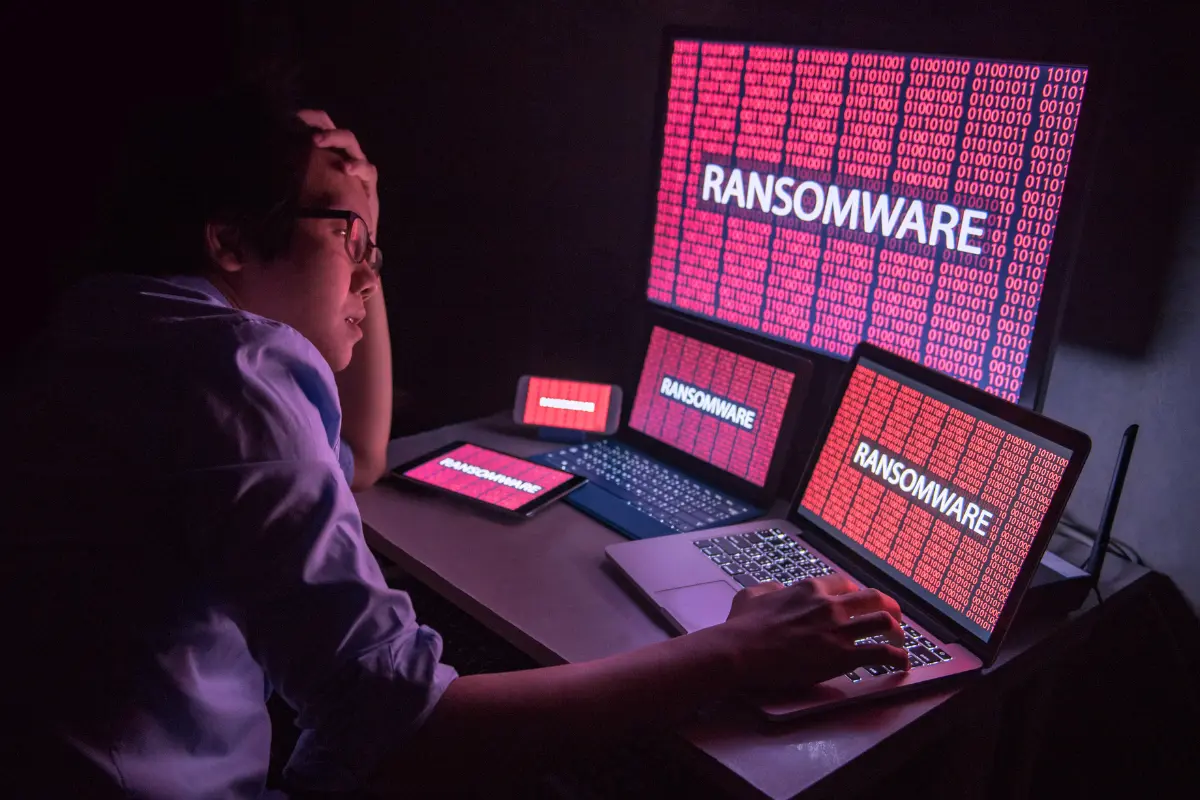

The digital landscape of 2025 has seen a dramatic shift in how cybercriminals operate. No longer are small businesses considered too small to notice. Instead, they have become the primary targets for organized cybercrime syndicates. Recent data from December 2025 reveals that nearly 50 percent of all small businesses in the United States have experienced a significant cyber incident in the last five years. As hackers leverage advanced artificial intelligence and automated exploitation tools, the need for robust defense strategies has never been more critical. This comprehensive guide outlines the essential steps every business owner must take to safeguard their enterprise against the rising tide of sophisticated ransomware.
- The State of Ransomware in December 2025
- Understanding the Sophisticated Ransomware Lifecycle
- Initial Access and AI Powered Phishing
- Lateral Movement and Credential Theft
- Data Exfiltration and the Double Extortion Trap
- Implementing a Zero Trust Security Architecture
- Advanced Technical Defenses for 2025
- Endpoint Detection and Response
- Network Segmentation and Micro Segmentation
- Cloud Security Posture Management
- The Critical Role of Cyber Insurance
- Building a Resilient Data Backup Strategy
- Cultivating a Security First Culture
- The Advantage of Managed Security Service Providers
- Legal and Regulatory Compliance
- Creating an Incident Response Plan
- Conclusion: The Path to Digital Resilience
The State of Ransomware in December 2025
As we navigate through the final weeks of 2025, the ransomware threat has evolved into a multi-stage extortion model. Unlike the simple encryption attacks of the past, modern threats now involve data exfiltration, public shaming, and even the direct harassment of a company’s clients. According to the Guardz 2025 SMB Cybersecurity Report released on December 17, 2025, phishing and employee errors remain the top entry points for these attacks.
The financial stakes have also reached new heights. While the average ransom demand for a small business currently sits around 35,000 dollars, the total cost of recovery often exceeds 120,000 dollars when accounting for downtime, legal fees, and brand damage. Most alarmingly, 60 percent of small companies that suffer a major data breach are forced to close their doors within six months. This makes proactive protection not just a technical requirement, but a fundamental pillar of business continuity.
Understanding the Sophisticated Ransomware Lifecycle
To build an effective defense, you must first understand how modern attackers infiltrate a network. The sophisticated ransomware lifecycle in 2025 typically follows a specific pattern of behavior.
Initial Access and AI Powered Phishing
The journey often begins with highly targeted social engineering. In 2025, attackers are using generative AI to create flawless, personalized phishing emails that are nearly indistinguishable from legitimate corporate communications. These emails often include realistic deepfake audio or video clips to convince employees to reveal their credentials or download malicious attachments.
Lateral Movement and Credential Theft
Once inside a single workstation, the ransomware does not immediately activate. Instead, it quietly moves across the network, a process known as lateral movement. The goal is to identify and compromise administrative accounts. By gaining high-level access, the attackers can disable security software and locate sensitive data repositories.
Data Exfiltration and the Double Extortion Trap
Before any encryption takes place, the hackers steal massive amounts of sensitive information. This includes customer databases, intellectual property, and financial records. By holding this data hostage, the attackers create a “double extortion” scenario. Even if a business can restore its systems from backups, the hackers threaten to leak the stolen data online unless a second payment is made.
Implementing a Zero Trust Security Architecture
The most effective way to combat sophisticated ransomware is the adoption of a Zero Trust architecture. This security philosophy assumes that threats exist both outside and inside the network. In a Zero Trust environment, no user or device is trusted by default, even if they are connected to the corporate office network.
Strict Identity and Access Management
Access management is the foundation of Zero Trust. You must implement the principle of least privilege, which ensures that employees only have access to the specific data and tools required for their job. This limits the “blast radius” of an attack. If one employee’s account is compromised, the ransomware is restricted from spreading to the entire company database.
Mandatory Multi Factor Authentication
Multi-factor authentication (MFA) is no longer optional. It is a mandatory requirement for every single login, including email, cloud storage, and internal applications. In 2025, push-based MFA or hardware security keys are preferred over SMS codes, which are increasingly vulnerable to sim-swapping attacks. Implementing robust MFA can reduce the risk of successful phishing by over 90 percent.
Advanced Technical Defenses for 2025
As threats become more automated, your defenses must also leverage modern technology. Relying on basic antivirus software is no longer sufficient to stop sophisticated adversaries.
Endpoint Detection and Response
Small businesses should invest in Endpoint Detection and Response (EDR) solutions. Unlike traditional antivirus, EDR uses behavioral analysis and machine learning to detect suspicious activity in real time. If a process starts encrypting files at an unusual rate, the EDR system can automatically isolate the affected device from the network, preventing the ransomware from spreading further.
Network Segmentation and Micro Segmentation
Flat networks are a gift to ransomware operators. By segmenting your network into smaller, isolated zones, you can contain threats. For example, your guest Wi-Fi should never be on the same network as your accounting software. Micro-segmentation takes this further by creating unique security policies for individual workloads in the cloud, providing an additional layer of protection for high-value assets.
Cloud Security Posture Management
With most small businesses now relying on cloud services like AWS, Azure, or Google Cloud, maintaining a secure configuration is vital. Cloud Security Posture Management (CSPM) tools help identify misconfigured storage buckets or open ports that could serve as an open door for hackers. These tools provide continuous monitoring to ensure your cloud environment stays compliant with security best practices.
The Critical Role of Cyber Insurance
In the current threat environment, cyber liability insurance has transitioned from a luxury to a necessity. As recovery costs skyrocket, having a dedicated policy can provide the financial and professional resources needed to survive an attack.
Meeting Insurance Eligibility Requirements
In 2025, insurance providers are becoming far more selective about who they cover. To secure a policy at a reasonable premium, small businesses must demonstrate that they have specific security controls in place. These often include:
- Documented incident response plans.
- Verified and tested immutable backups.
- Widespread use of multi-factor authentication.
- Regular employee security awareness training.
Access to Incident Response Professionals
One of the greatest benefits of a cyber insurance policy is the access it provides to expert teams. If an attack occurs, your insurer will typically provide forensic investigators, legal counsel specialized in data privacy, and public relations experts. These professionals can guide you through the complex process of containment, notification, and recovery, significantly reducing the long-term impact on your business.
Building a Resilient Data Backup Strategy
If all other defenses fail, your backups are the final line of defense. However, modern ransomware specifically targets backup files to ensure the victim has no choice but to pay. To counter this, businesses must adopt the 3-2-1-1 backup rule.
The 3 2 1 1 Backup Framework
- 3: Maintain at least three copies of your data.
- 2: Store these copies on two different media types (for example, cloud and local disk).
- 1: Keep at least one copy in an off-site location.
- 1: Ensure at least one copy is immutable or air-gapped.
Immutable Storage and Air Gapping
Immutable storage is a technology that prevents data from being changed or deleted for a set period. Even if an attacker gains administrative access to your network, they cannot delete these backups. An air-gapped backup is one that is physically disconnected from any network, making it impossible for a remote hacker to reach it. Testing these backups weekly is essential to ensure they are actually functional when a crisis hits.
Cultivating a Security First Culture
Technological solutions are only half of the equation. Because human error contributes to over 90 percent of data breaches, your employees must be trained to act as a human firewall.
Continuous Security Awareness Training
Traditional once-a-year training sessions are ineffective. Instead, implement a continuous training program that includes simulated phishing attacks. These simulations help employees recognize the subtle signs of a sophisticated scam in a safe environment. When employees know that they are part of the defense team, they are much more likely to report suspicious activity early.
Establishing Clear Security Protocols
Every small business needs a set of clear, written security policies. These should cover password management, the use of personal devices for work (BYOD), and the procedure for reporting a potential security incident. Make sure your team knows that they will not be punished for reporting a mistake. Rapid reporting is the key to stopping a minor intrusion before it turns into a full-scale ransomware catastrophe.
The Advantage of Managed Security Service Providers
Many small business owners lack the time and expertise to manage complex cybersecurity operations on their own. This is where a Managed Security Service Provider (MSSP) becomes invaluable. An MSSP provides 24/7 monitoring, threat hunting, and specialized expertise at a fraction of the cost of hiring a full-time in-house security team.
Proactive Threat Hunting and Monitoring
An MSSP does not just wait for an alarm to go off. They proactively scan your network for signs of compromise, such as unusual login locations or unauthorized changes to user permissions. In 2025, this level of constant vigilance is necessary to catch the “silent” phase of a ransomware attack before the encryption begins.
Scalable Security Solutions
As your business grows, your security needs will change. An MSSP can scale your protection accordingly, ensuring that new employees, office locations, and cloud applications are integrated into your secure perimeter from day one. This allows you to focus on running your business while experts handle the ever-changing threat landscape.
Legal and Regulatory Compliance
Protecting your business is not just about avoiding a payout; it is also about staying on the right side of the law. Regulations such as the GDPR, CCPA, and the NIS2 Directive have strict requirements for how businesses protect and report data breaches.
Understanding Data Privacy Obligations
Small businesses are often surprised to learn that they are legally obligated to protect personal data, even if they only have a few hundred customers. Failure to do so can result in massive fines that are often more expensive than the ransom itself. Implementing a strong cybersecurity framework like NIST or CIS can help you meet these regulatory requirements and demonstrate due diligence to your stakeholders.
Notification Requirements After an Attack
If a breach occurs, you are often legally required to notify the affected individuals and regulatory authorities within a specific timeframe (sometimes as short as 72 hours). Having a pre-defined communication plan ensures that you can meet these deadlines without causing unnecessary panic. Honesty and transparency with your customers after an attack can help preserve the trust you have worked so hard to build.
Creating an Incident Response Plan
When a ransomware attack hits, every second counts. You cannot afford to figure out your strategy while your files are being encrypted. A well-documented incident response plan is your playbook for a crisis.
Immediate Containment Steps
Your plan should clearly outline the first steps to take when a suspicious activity is detected. This usually includes:
- Disconnecting the infected device from the Wi-Fi and ethernet.
- Disabling remote access tools like RDP or VPNs.
- Changing the passwords for all administrative accounts.
- Notifying your MSP and insurance provider immediately.
Communication and Recovery Protocols
The plan should also designate a crisis lead who is responsible for all communications. This prevents conflicting information from being shared with employees or the media. Finally, the plan must include a clear path for recovery, starting with the most critical business systems. Practicing these steps through a “tabletop exercise” ensures that everyone knows their role when a real threat emerges.
Conclusion: The Path to Digital Resilience
Protecting a small business from sophisticated ransomware in 2025 requires a shift in mindset. It is no longer enough to hope for the best; you must prepare for the inevitable. By implementing a layered defense strategy that combines Zero Trust principles, advanced endpoint protection, robust backups, and comprehensive cyber insurance, you can build a resilient enterprise that is capable of withstanding modern threats.
The digital world offers incredible opportunities for growth, but those opportunities come with significant risks. Staying informed about the latest trends and investing in the right tools and partnerships is the best way to ensure your small business thrives in the years to come. Do not wait for a notification on your screen to start taking cybersecurity seriously. The time to build your fortress is now.