
The digital landscape of modern commerce is undergoing a seismic shift. As retail enterprises and distributed branch offices move away from legacy infrastructure, the demand for agile, secure, and high-performance networking has never been greater. For businesses operating across dozens or even thousands of locations, the traditional Wide Area Network (WAN) is no longer sufficient.
- The Evolving Needs of Retail and Branch Office Networks
- 1. High Availability and Seamless Failover
- 2. Zero-Touch Provisioning (ZTP)
- 3. Integrated Security and Compliance
- Top SD-WAN Vendors for Retail and Branch Offices
- Fortinet: The Power of Security Convergence
- Cisco (Meraki and Catalyst): The Industry Standard
- VMware by Broadcom (VeloCloud): Cloud-First Performance
- Palo Alto Networks (Prisma SD-WAN): AI-Driven Operations
- Comparative Analysis of Top Vendors
- Market Trends for December 2025
- 1. The Proliferation of 5G as Primary Connectivity
- 2. Edge Compute Integration
- 3. Sustainability and “Green” Networking
- How to Choose the Right Solution for Your Branch Office
- Step 1: Define Your Application Profile
- Step 2: Assess Your Internal Expertise
- Step 3: Calculate Total Cost of Ownership (TCO)
- The Role of SASE in the Modern Branch
- Future-Proofing Your Retail Connectivity
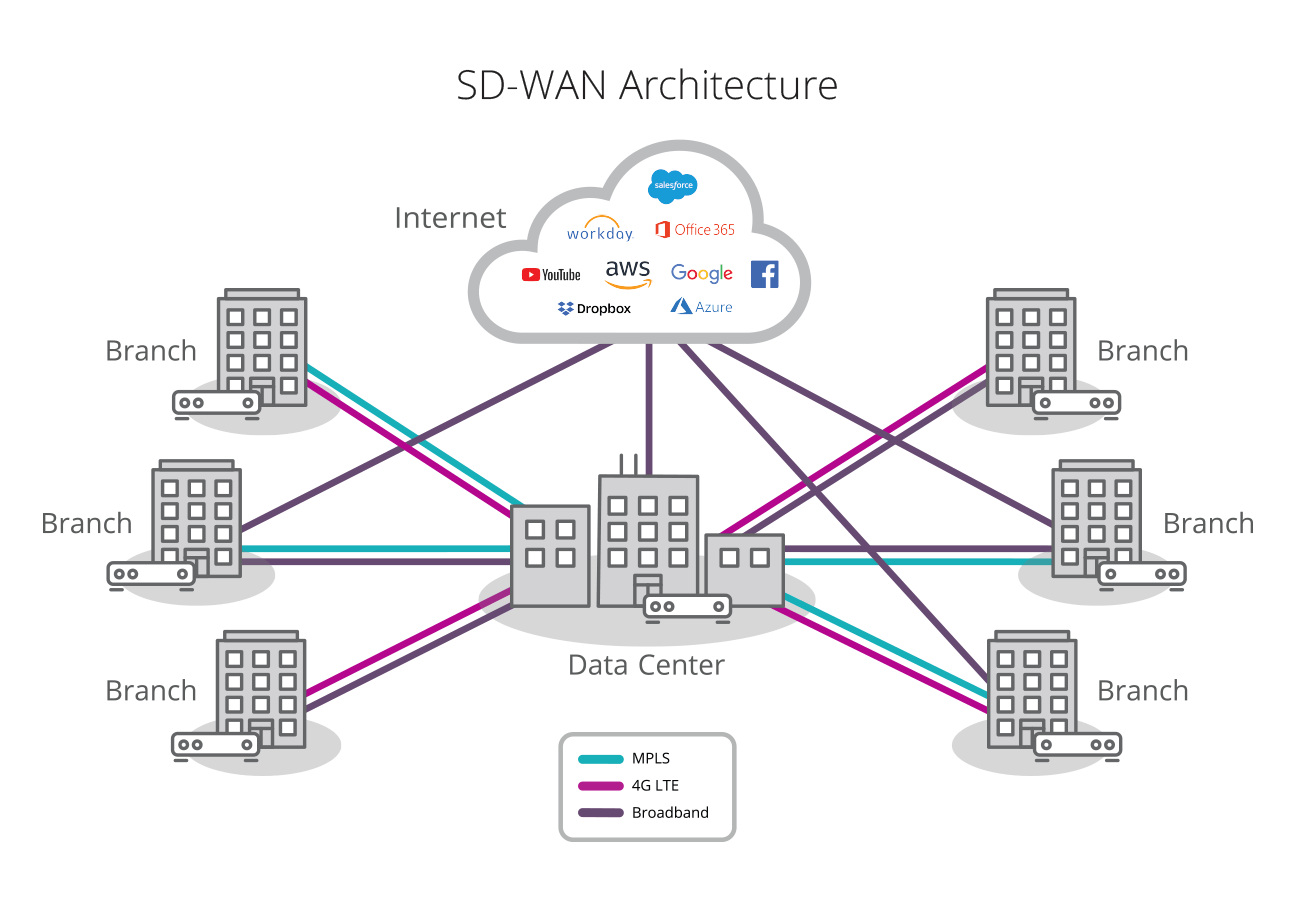
Software-Defined Wide Area Networking (SD-WAN) has emerged as the definitive solution for these challenges. By decoupling the network hardware from its control mechanism, SD-WAN allows retail managers and IT directors to prioritize critical traffic, such as Point of Sale (POS) transactions and real-time inventory updates, over guest Wi-Fi or back-office downloads.
In 2025, the market is characterized by a “security-first” approach. No longer is connectivity just about speed; it is about the convergence of networking and advanced cybersecurity, often referred to as Secure Access Service Edge (SASE). This comprehensive guide explores the top vendors leading the charge in retail and branch office connectivity, providing the technical depth and market insights necessary for informed decision-making.
The Evolving Needs of Retail and Branch Office Networks
To understand why specific vendors stand out, one must first recognize the unique pressures faced by retail and branch environments today. These locations are the front lines of customer interaction, where downtime is not just a nuisance but a direct loss of revenue.
1. High Availability and Seamless Failover
A retail store cannot afford to stop processing payments. Modern SD-WAN solutions utilize multiple transport links such as fiber, broadband, and 5G simultaneously. If one link fails, the system automatically reroutes traffic without dropping a single session.
2. Zero-Touch Provisioning (ZTP)
For a retail chain opening twenty new locations in a month, sending a highly skilled engineer to every site is financially unfeasible. ZTP allows a non-technical store manager to simply plug in a device, which then automatically downloads its configuration from the cloud.
3. Integrated Security and Compliance
Retailers handle sensitive customer data and must adhere to strict PCI-DSS compliance standards. Integrating firewalls and encryption directly into the SD-WAN appliance simplifies the “branch-in-a-box” model.
Top SD-WAN Vendors for Retail and Branch Offices
The following vendors have been selected based on their market performance, technical innovation, and specific feature sets tailored for distributed enterprises in 2025.
Fortinet: The Power of Security Convergence
Fortinet remains a dominant force in the retail sector due to its unique “Security-Driven Networking” philosophy. Their FortiGate Secure SD-WAN solution is widely regarded for its ability to consolidate networking and security into a single, high-performance appliance.
- Integrated ASIC Technology: Fortinet utilizes custom-built security processors (ASICs) that allow for deep packet inspection without compromising network throughput. This is critical for retail offices running multiple security protocols.
- Cost-Effectiveness: Because security features are built-in rather than added as separate licenses, the total cost of ownership (TCO) is often lower than competitors who require third-party security integrations.
- Scalability: From small “pop-up” shops to massive flagship stores, Fortinet offers a range of appliances that fit every footprint.
Cisco (Meraki and Catalyst): The Industry Standard
Cisco offers two distinct paths for retail connectivity, catering to different levels of IT complexity.
- Cisco Meraki: This is the gold standard for ease of use. Meraki is managed entirely through a cloud-based dashboard, making it the favorite for retailers who want a “set it and forget it” solution. Its intuitive interface allows for the management of thousands of sites from a single pane of glass.
- Cisco Catalyst SD-WAN: For larger branch offices with highly complex routing requirements, the Catalyst (formerly Viptela) line provides granular control and advanced segmentation capabilities.
- Advanced Analytics: Cisco’s ThousandEyes integration provides unparalleled visibility into the health of the internet and cloud applications, allowing IT teams to troubleshoot issues before they affect the store experience.
- Global Support: With the largest support network in the world, Cisco ensures that global retail brands have access to technical assistance regardless of where their branches are located.
VMware by Broadcom (VeloCloud): Cloud-First Performance
VMware SD-WAN remains a top contender, particularly for organizations that rely heavily on cloud-hosted applications (SaaS). Its “Cloud Gateway” architecture is specifically designed to optimize traffic to and from platforms like Microsoft 365 and Salesforce.
- Dynamic Multi-Path Optimization (DMPO): This feature monitors links in real-time and can correct for packet loss and jitter on the fly. In a retail environment, this ensures that VoIP calls and video conferencing remain crystal clear even on “dirty” internet links.
- Network of Gateways: VMware’s global network of gateways simplifies the connection between the branch office and the cloud, reducing latency and improving the end-user experience.
Palo Alto Networks (Prisma SD-WAN): AI-Driven Operations
Palo Alto Networks has disrupted the market with its Prisma SD-WAN, which focuses on “Autonomous Digital Experience Management” (ADEM). This solution uses artificial intelligence and machine learning to predict and resolve network issues automatically.
- App-Defined Policy: Instead of routing based on IP addresses, Prisma routes based on the application. It understands the specific requirements of a POS system versus a streaming music service.
- Integrated SASE: As a leader in the SASE space, Palo Alto offers a seamless transition for retailers looking to move their entire security stack to the cloud.
Comparative Analysis of Top Vendors
Selecting the right vendor requires a side-by-side comparison of their core strengths and typical use cases.
| Vendor | Primary Strength | Best For | Management Style |
| Fortinet | Integrated Security | Highly regulated retail (Pharmacies, Finance) | Unified (Security + Network) |
| Cisco Meraki | Simplicity & Scale | Rapidly growing retail chains | Cloud Dashboard |
| VMware | Cloud Optimization | SaaS-heavy branch offices | Gateway-centric |
| Palo Alto | AI & Automation | Large enterprises seeking Zero Trust | AI-driven / Autonomous |
Market Trends for December 2025
The SD-WAN landscape is moving faster than ever. Several key trends are defining the strategies of top retailers this month:
1. The Proliferation of 5G as Primary Connectivity
In 2025, 5G is no longer just a backup. Many retail locations, especially in urban areas, are using 5G as their primary link due to its rapid deployment capabilities. Vendors like Ericsson (Cradlepoint) have specialized in this “Wireless WAN” niche, often integrating directly with SD-WAN controllers.
2. Edge Compute Integration
Retail stores are becoming “micro-data centers.” Between AI-powered security cameras, smart shelving, and interactive kiosks, the need to process data locally is growing. Modern SD-WAN appliances are now being built with additional compute power to host these “edge” applications.
3. Sustainability and “Green” Networking
Enterprise organizations are increasingly looking at the energy consumption of their branch hardware. Vendors who offer energy-efficient appliances and centralized power management are gaining an edge in large-scale RFPs.
How to Choose the Right Solution for Your Branch Office
Evaluating an SD-WAN vendor is a multi-step process that involves both technical and financial scrutiny.
Step 1: Define Your Application Profile
Identify which applications are mission-critical. If your branch office relies on heavy video processing or complex local databases, you need a solution with strong edge compute. If your retail store is 100% cloud-based, look for a vendor with a strong gateway presence.
Step 2: Assess Your Internal Expertise
A highly customizable solution like Cisco Catalyst is powerful but requires a skilled team to manage. If your IT department is lean, a cloud-managed solution like Meraki or Cato Networks may offer a better return on investment.
Step 3: Calculate Total Cost of Ownership (TCO)
Be wary of low upfront hardware costs that are eclipsed by high recurring license fees. Calculate the cost over a 3-year or 5-year period, including support, security updates, and any necessary third-party integrations.
The Role of SASE in the Modern Branch
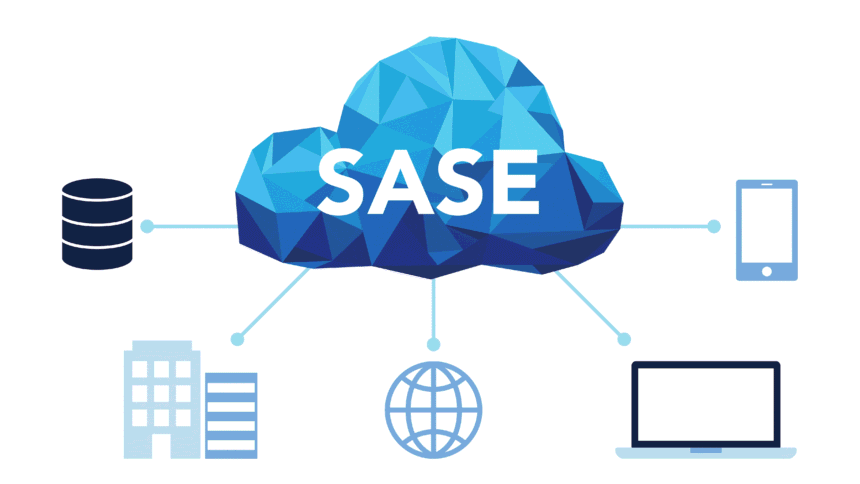
The conversation around connectivity is incomplete without mentioning SASE (Secure Access Service Edge). SASE is the architectural convergence of SD-WAN and cloud-delivered security. In a SASE model, the “branch” is no longer a physical location but a user or a device.
Retailers are moving toward SASE to ensure that remote employees, such as regional managers or home-office staff, have the same level of security and performance as those inside a physical store. Vendors like Zscaler and Cato Networks are leaders in this space, providing a global “cloud fabric” that connects and secures every edge.
Future-Proofing Your Retail Connectivity
As we look toward 2026 and beyond, the integration of Generative AI into network management will be the next major frontier. We are already seeing the beginnings of “Self-Healing Networks” where the SD-WAN controller can detect a fiber cut miles away and automatically notify the ISP while simultaneously shifting all critical store traffic to a satellite or cellular link.
The key to future-proofing is flexibility. Choose a vendor that supports open APIs and has a track record of integrating with emerging technologies. Avoid “vendor lock-in” by ensuring your SD-WAN platform can work with various transport providers and third-party security tools if necessary.