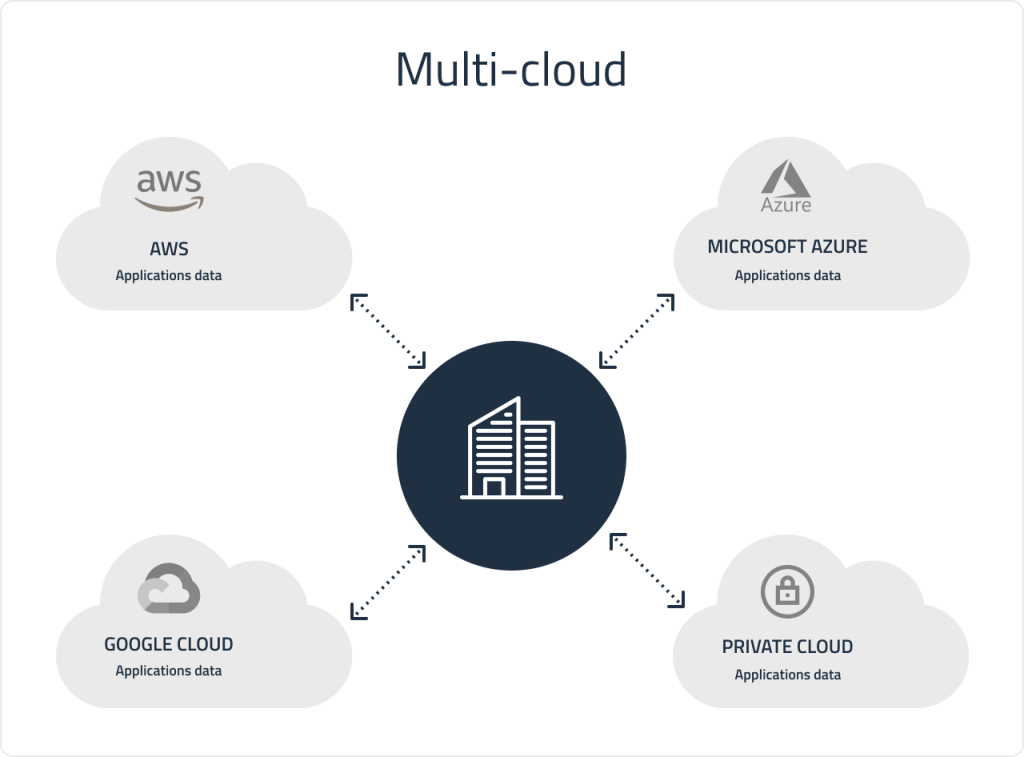

The digital landscape of 2025 has moved past the era of single-provider loyalty. Today, over 87 percent of global enterprises operate within a multi-cloud environment, leveraging the unique strengths of Amazon Web Services (AWS), Microsoft Azure, and Google Cloud Platform (GCP). This strategic shift is not merely about redundancy; it is about performance, compliance, and accessing specialized artificial intelligence (AI) and machine learning (ML) capabilities that vary across providers.
- The Evolution of Cloud Connectivity in 2025
- Strategic Pillars: Why Multi-Cloud Networking Matters
- Core Networking Components Across the Big Three
- Amazon Web Services (AWS) Networking
- Microsoft Azure Networking
- Google Cloud Platform (GCP) Networking
- Primary Interconnection Methods: The Technical Deep Dive
- 1. Site-to-Site VPN (The Entry Level)
- 2. Dedicated Cloud Interconnects (The Enterprise Gold Standard)
- 3. The 2025 Breakthrough: AWS Interconnect – Multicloud
- Architecting the Multi-Cloud Network Hub
- Overcoming the “Egress” Challenge: Cost and Performance
- Security in a Multi-Cloud World: Zero Trust and SASE
- Third-Party Orchestration: The “Overlay” Solutions
- Implementation Guide: Step-by-Step Interconnection
- Step 1: Provision the Physical/Virtual Port
- Step 2: Request AWS Direct Connect
- Step 3: Request Azure ExpressRoute
- Step 4: Configure BGP (Border Gateway Protocol)
- Step 5: Test and Secure
- Current 2025 Market Trends and Live Insights
- Summary of Best Practices for Multi-Cloud Networking
- Deep Dive: Managing Specific Workload Requirements
- The Role of Infrastructure as Code (IaC)
- Future Outlook: What to Expect in 2026
- Multi-cloud networking
However, the primary hurdle remains: connectivity. Building a seamless network that spans these giants requires a deep understanding of cloud-native architectures, third-party orchestration, and the latest 2025 interconnectivity protocols. This guide provides a comprehensive roadmap for architects and IT leaders to master the complexities of multi-cloud networking.
The Evolution of Cloud Connectivity in 2025
In previous years, connecting two different cloud providers was a manual, complex process involving multiple virtual private networks (VPNs) and high-latency internet hops. As we move through December 2025, the industry has seen a massive push toward “Native Interconnectivity.”
Cloud providers have realized that customers will use multiple platforms regardless of competition. This has led to the release of revolutionary tools like AWS Interconnect – Multicloud, which was launched in late 2025 to allow direct, private Layer 3 connectivity between AWS and other providers like Google Cloud and eventually Azure.
Strategic Pillars: Why Multi-Cloud Networking Matters
Before diving into the technical configurations, it is vital to understand the business and technical drivers that make this architecture necessary for high-performance enterprise applications.
1. Avoiding Vendor Lock-in
The ability to migrate workloads or distribute services prevents a business from being at the mercy of a single provider’s pricing or service outages. By maintaining a seamless network, shifting a containerized application from GCP to Azure becomes a matter of routing rather than a complete re-architecture.
2. Best-of-Breed Service Access
Enterprises often choose:
- AWS for its vast ecosystem of mature infrastructure services and serverless capabilities.
- Azure for its deep integration with Microsoft 365, Active Directory, and enterprise data tools.
- GCP for its industry-leading data analytics, BigQuery, and specialized AI hardware like Tensor Processing Units (TPUs).
3. Data Sovereignty and Compliance
With regulations like GDPR and various local data protection laws, certain data must reside in specific regions. A multi-cloud network allows an organization to process data in an Azure region in Germany while using AWS services in the United States for global distribution.
Core Networking Components Across the Big Three
To connect these clouds, you must first speak their individual networking languages. Each provider has its own terminology and structure for virtual networks.
Amazon Web Services (AWS) Networking
The foundation of AWS networking is the Virtual Private Cloud (VPC). Inside a VPC, you manage:
- Subnets: Isolated segments within Availability Zones.
- Route Tables: Logic that dictates where traffic flows.
- Transit Gateway: A hub that connects multiple VPCs and on-premises networks.
Microsoft Azure Networking
Azure uses Virtual Networks (VNets). Key components include:
- Virtual Network Peering: Connecting two VNets within the same or different regions.
- Azure Virtual WAN: A networking service that provides optimized and automated branch connectivity to, and through, Azure.
- Private Link: Allows private access to Azure PaaS services without leaving the Microsoft backbone.
Google Cloud Platform (GCP) Networking
GCP takes a unique “Global VPC” approach. Unlike AWS and Azure, a single GCP VPC can span multiple regions.
- Cloud Router: Uses BGP to exchange routes between your VPC and external networks.
- Network Connectivity Center: A unified hub for managing complex global connectivity.
Primary Interconnection Methods: The Technical Deep Dive
Connecting these clouds can be achieved through three primary methods: Public Internet/VPN, Dedicated Interconnects, and the new 2025 Native Interconnects.
1. Site-to-Site VPN (The Entry Level)
Using IPsec VPN tunnels over the public internet is the fastest way to establish a connection. It is cost-effective but suffers from unpredictable latency and throughput.
- Use Case: Development environments or low-priority data replication.
- Constraint: You are limited by the performance of the public internet.
2. Dedicated Cloud Interconnects (The Enterprise Gold Standard)
For production workloads, enterprises use dedicated circuits:
- AWS Direct Connect: A private link from your data center to AWS.
- Azure ExpressRoute: A private connection to the Microsoft cloud.
- GCP Cloud Interconnect: Professional-grade connectivity to Google.
To link clouds using these, architects often use a Cloud Exchange (like Equinix or Megaport). You pull a Direct Connect and an ExpressRoute into the same physical data center and bridge them there.
3. The 2025 Breakthrough: AWS Interconnect – Multicloud
As of November 2025, AWS has introduced a preview of AWS Interconnect – Multicloud. This service removes the need for a third-party exchange for certain routes. It allows an architect to provision a private connection to Google Cloud directly from the AWS Console using a pre-cabled backbone. This reduces the setup time from weeks to minutes.
Source:AWS Announces Preview of AWS Interconnect – Multicloud (Nov 2025)
Architecting the Multi-Cloud Network Hub
Most modern enterprises adopt a Hub-and-Spoke architecture to manage complexity. This involves a central “Hub” (either in one cloud or a neutral location) that handles all routing, security inspection, and logging.
The Transit Hub Strategy
In this model, you designate one cloud provider as the primary networking hub. For example:
- Central Hub: AWS Transit Gateway.
- Spoke 1: Azure VNets connected via Site-to-Site VPN or ExpressRoute.
- Spoke 2: GCP VPCs connected via Cloud Interconnect.
This centralizes the management of firewall rules and inspection. However, it can lead to “Hairpinning,” where traffic from Azure to GCP must pass through AWS, increasing latency and data egress costs.
The Mesh Strategy
A full mesh architecture involves every cloud VPC/VNet being directly connected to every other. While this provides the lowest latency, it becomes an operational nightmare as you scale beyond three or four VPCs.
Overcoming the “Egress” Challenge: Cost and Performance
One of the most significant barriers to multi-cloud networking is the Data Egress Fee. Cloud providers typically do not charge for data coming in, but they charge significantly for data leaving their network.
Strategies for 2025 Cost Optimization:
- Direct Peering: Using private interconnects (Direct Connect/ExpressRoute) often reduces the cost per GB compared to public internet egress.
- Content Delivery Networks (CDNs): Use a multi-cloud CDN (like Cloudflare or Akamai) to cache data at the edge, reducing the need for repeated data transfers between clouds.
- Data Minimization: Use efficient data formats (like Parquet or Avro) and compress data before moving it across cloud boundaries.
Security in a Multi-Cloud World: Zero Trust and SASE
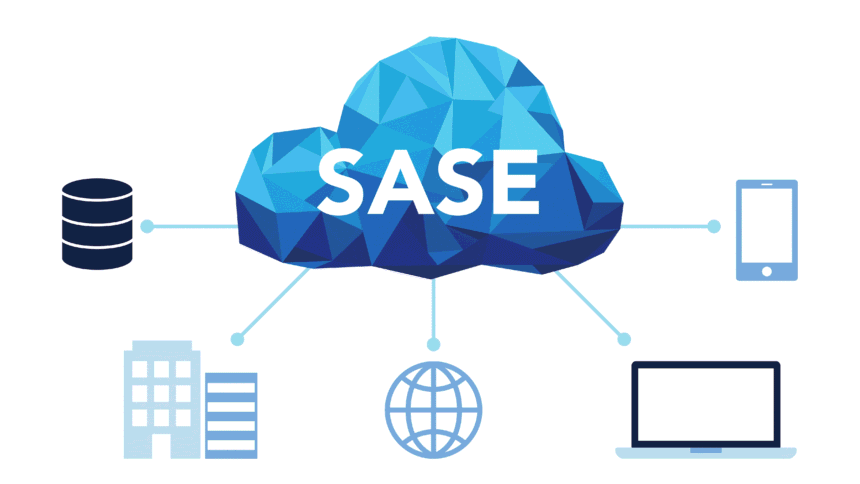
Security is the biggest concern when traffic leaves the “walled garden” of a single cloud provider. In 2025, the industry has standardized on Zero Trust Architecture (ZTA) and Secure Access Service Edge (SASE).
Zero Trust Principles for Networking
- Never Trust, Always Verify: Every packet must be authenticated and authorized, regardless of whether it originates in AWS or Azure.
- Micro-segmentation: Break the network into tiny zones. If a server in GCP is compromised, it should have no inherent path to a database in AWS.
- Identity-Based Access: Move away from IP-based firewall rules to identity-aware proxies (e.g., Google BeyondCorp or Azure Active Directory).
AI-Driven Threat Detection
Modern networking tools now use AI to monitor traffic patterns across clouds. If an unusual volume of data starts moving from an AWS S3 bucket to an unrecognized GCP endpoint, AI-powered security systems (like Microsoft Sentinel or AWS GuardDuty) can automatically sever the connection.
Third-Party Orchestration: The “Overlay” Solutions
Managing native tools across three providers is difficult because their APIs and consoles are completely different. This has given rise to Multi-Cloud Networking Software (MCNS) providers.
1. Aviatrix
Aviatrix provides a “Single Pane of Glass” for multi-cloud networking. It installs its own software routers (Gateways) into your VPCs/VNets and creates a unified, encrypted transit layer. This makes the network look and feel the same regardless of the underlying provider.
2. Megaport and Equinix
These are “Network as a Service” (NaaS) providers. They allow you to provision virtual cross-connects between clouds in seconds through a web portal. They provide the “pipes” that connect the clouds without going over the public internet.
3. Alkira
Alkira offers a “Cloud Networking as a Service” approach where you do not even manage the routers. You simply define your intent (e.g., “Connect this AWS VPC to this Azure VNet with a firewall in the middle”), and their platform handles the underlying infrastructure.
Implementation Guide: Step-by-Step Interconnection
To give you a practical starting point, here is a simplified workflow for connecting an AWS environment to an Azure environment using the most common enterprise method (Third-party Cloud Exchange).
Step 1: Provision the Physical/Virtual Port
Go to a provider like Megaport or Equinix and create a virtual port in a region where both AWS and Azure have a presence (e.g., US-East).
Step 2: Request AWS Direct Connect
In the AWS Console, request a “Hosted Connection” from your partner. Once approved, create a Direct Connect Gateway and associate it with your VPCs.
Step 3: Request Azure ExpressRoute
In the Azure Portal, create an ExpressRoute Circuit. Provide the “Service Key” to your exchange provider (Megaport/Equinix) to complete the physical layer connection.
Step 4: Configure BGP (Border Gateway Protocol)
This is where the magic happens. You must configure BGP peering so that AWS “learns” the routes to Azure and vice versa.
- ASN (Autonomous System Number): You will need unique ASNs for each side.
- Prefixes: Define which IP ranges should be advertised.
Step 5: Test and Secure
Perform a trace route to ensure traffic is taking the private path and not the public internet. Apply Security Groups (AWS) and Network Security Groups (Azure) to restrict traffic to only necessary ports (e.g., HTTPS on 443).
Current 2025 Market Trends and Live Insights
As of late 2025, several trends are reshaping the multi-cloud networking landscape:
- Quantum-Safe Networking: With the rise of quantum computing, providers are beginning to offer post-quantum cryptographic (PQC) algorithms for VPN and interconnect encryption.
- Sovereign Clouds: Governments are increasingly demanding “Sovereign Clouds” where the hardware is physically separated. Networking these into a global multi-cloud strategy while maintaining “air-gap” integrity is a major focus for 2026 planning.
- AI-Orchestrated Paths: Modern SD-WAN tools are now using AI to dynamically change paths between clouds based on real-time latency and cost. If a fiber cut in the Atlantic increases latency on an Azure route, the system may automatically shift non-critical traffic to a GCP-to-AWS route.
Summary of Best Practices for Multi-Cloud Networking
To ensure a successful deployment, keep these principles at the center of your architecture:
- Standardize IP Addressing: Avoid overlapping CIDR blocks across different clouds. If both AWS and Azure use
10.0.0.0/16, you will face significant routing headaches that require complex NAT (Network Address Translation). - Automate Everything: Use Infrastructure as Code (IaC) tools like Terraform or Pulumi. Manually configuring routes in three different consoles is a recipe for human error and security holes.
- Centralize Visibility: Use a cross-cloud monitoring tool (like Datadog, New Relic, or Aviatrix Co-Pilot) to see the entire network flow in one map.
- Plan for Failure: Even private interconnects can fail. Always have a secondary path (perhaps a lower-bandwidth VPN) for mission-critical traffic.
Deep Dive: Managing Specific Workload Requirements
Different applications have different networking needs. A database cluster requires low latency, while a batch processing job might prioritize cost over speed.
High-Frequency Data Replication
If you are running a globally distributed database (like CockroachDB or YugabyteDB) across clouds, latency is your enemy. You must use dedicated interconnects and place your cloud regions as close together as possible (e.g., AWS us-east-1 and Azure East US).
- Target Latency: Aim for sub-10ms.
AI and Big Data Workloads
When moving massive datasets from AWS S3 to GCP for BigQuery analysis, bandwidth is the priority. This is where the 2025 native interconnects shine, providing 100Gbps+ throughput without the overhead of VPN encryption.
Hybrid-Edge Connectivity
Many organizations are now using “Edge” locations (like AWS Wavelength or Azure for Operators). Connecting these edge nodes into the multi-cloud fabric requires a robust SD-WAN strategy to handle the varying quality of cellular and local fiber connections.
The Role of Infrastructure as Code (IaC)
In a multi-cloud environment, the network is too complex to manage by hand. Terraform has become the industry standard because of its “Provider” model. You can write a single script that:
- Creates an AWS VPC.
- Creates an Azure VNet.
- Establishes a Megaport VXC (Virtual Cross Connect) between them.
- Configures the BGP settings on both ends.
This ensures consistency and allows you to “version control” your network infrastructure just like you do with application code.
Terraform
# Example Terraform snippet (Conceptual)
resource "aws_vpc" "main" {
  cidr_block = "10.1.0.0/16"
}

resource "azurerm_virtual_network" "main" {
  name                = "azure-vnet"
  address_space       = ["10.2.0.0/16"]
  location            = "East US"
}
Future Outlook: What to Expect in 2026
As we look toward the next year, the “Seamless” part of multi-cloud networking will only improve. We expect to see:
- Unified Cloud Control Planes: Further blurring the lines between where one cloud ends and another begins.
- Serverless Networking: Networking components that scale up and down automatically based on traffic, similar to how Lambda or Cloud Functions work today.
- Carbon-Aware Routing: Networking paths chosen based on the carbon intensity of the data centers they pass through, helping companies meet ESG (Environmental, Social, and Governance) goals.
Multi-cloud networking
Multi-cloud networking in 2025 is no longer an “experimental” setup. It is a foundational requirement for the modern, resilient enterprise. By combining the latest native interconnect services from AWS, Azure, and GCP with robust third-party orchestration and a Zero Trust security mindset, organizations can build a network that is truly borderless.
The journey toward seamless connectivity requires continuous learning and adaptation. As providers release new APIs and the 2025 market continues to evolve, the architects who master these cross-cloud bridges will be the ones driving the next wave of digital innovation.