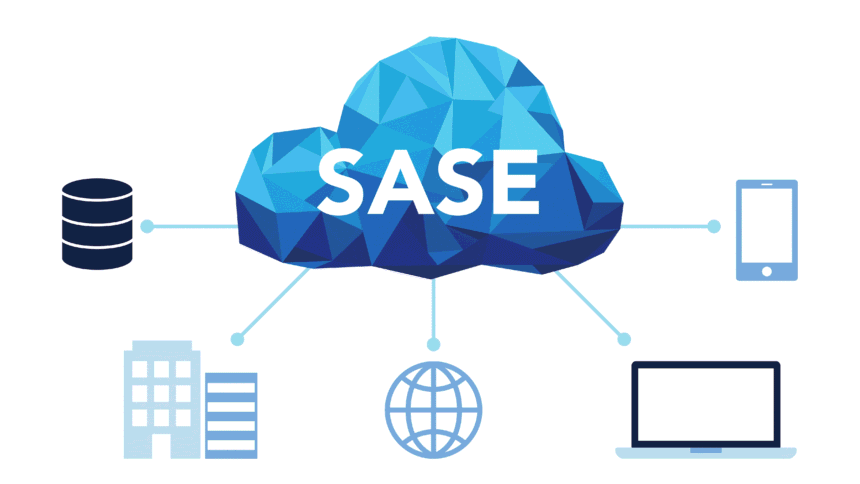


The architectural requirements for global connectivity have shifted from traditional localized networks to a decentralized, cloud first approach. As enterprises move away from the constraints of legacy Virtual Private Networks (VPNs) and hardware dependent security, the Secure Access Service Edge (SASE) framework has emerged as the definitive standard for modern networking.
- Understanding the SASE Framework in 2025
- 1. Software Defined Wide Area Networking (SD-WAN)
- 2. Secure Web Gateway (SWG)
- 3. Cloud Access Security Broker (CASB)
- 4. Zero Trust Network Access (ZTNA)
- 5. Firewall as a Service (FWaaS)
- Top SASE Providers for Global Teams: 2025 Analysis
- Palo Alto Networks: Prisma Access
- Zscaler: The Zero Trust Exchange
- Cisco: Cisco Secure Connect
- Netskope: The Data Centric SASE
- Fortinet: FortiSASE
- Cato Networks: The SASE Pioneer
- Cloudflare: Cloudflare One
- Critical Trends for SASE in 2025
- Comparing the Best SASE Solutions
- How to Choose the Right SASE Provider for Your Global Team
- Assess Your Current Infrastructure
- Evaluate Global PoP Density
- Data Residency and Compliance Requirements
- Scalability and Pricing Models
- Implementation Strategies for Global SASE
- The Future of SASE: Beyond 2025
For global teams, SASE is not just a luxury but a fundamental necessity. It converges wide area networking (WAN) capabilities with comprehensive security services, all delivered through a unified cloud native platform. This guide explores the premier SASE providers of 2025, detailing their unique strengths, technological innovations, and how they solve the complex challenges of securing a distributed workforce across international borders.
Understanding the SASE Framework in 2025
Before evaluating specific vendors, it is critical to understand the five core pillars that constitute a true SASE solution. In 2025, the market has moved beyond fragmented point products toward a fully integrated architecture.
1. Software Defined Wide Area Networking (SD-WAN)
SD-WAN is the connectivity foundation of SASE. It optimizes the routing of traffic across various transport methods, including broadband, LTE, 5G, and dedicated fiber. By decoupling the network hardware from its control mechanism, SD-WAN allows global teams to prioritize critical application traffic, such as VoIP or ERP systems, ensuring high performance even in regions with volatile internet quality.
2. Secure Web Gateway (SWG)
A cloud delivered SWG provides a first line of defense against web based threats. It inspects all unencrypted and encrypted traffic at the network edge, blocking malicious websites and enforcing corporate acceptable use policies. Modern SWGs now incorporate advanced sandboxing and AI driven URL filtering to stop zero day phishing attempts before they reach the endpoint.
3. Cloud Access Security Broker (CASB)
As organizations rely more heavily on SaaS platforms like Salesforce, Microsoft 365, and Slack, CASB has become vital. It provides visibility into “Shadow IT” (unsanctioned application use) and enforces data protection policies within sanctioned apps. This ensures that sensitive corporate data does not leak through cloud storage or collaborative tools.
4. Zero Trust Network Access (ZTNA)
ZTNA is perhaps the most transformative element of the SASE stack. It replaces the old “connect then verify” model of VPNs with a “verify then connect” approach. Access is granted only to specific applications based on user identity, device posture, and contextual factors, significantly reducing the lateral movement risks associated with cyberattacks.
5. Firewall as a Service (FWaaS)
FWaaS takes the capabilities of a traditional next generation firewall (NGFW) and scales them into the cloud. This allows global teams to apply consistent security policies across every branch office and remote user, regardless of their physical location, without the need for expensive on-premises appliances.
Top SASE Providers for Global Teams: 2025 Analysis
The following providers represent the vanguard of the industry, as recognized by the latest July 2025 industry research and market performance data.
Palo Alto Networks: Prisma Access
Palo Alto Networks continues to lead the market with its Prisma SASE solution. It is widely considered the gold standard for large enterprises that require a robust, security first approach.
Key Features for Global Teams:
- Global Scalability: Prisma Access leverages a massive cloud footprint, ensuring that users in any part of the world experience low latency.
- Autonomous Digital Experience Management (ADEM): This feature provides deep visibility into the performance of applications from the user’s perspective, helping IT teams troubleshoot connectivity issues in real time.
- Integrated AI-Powered Security: Utilizing the Precision AI engine, Palo Alto can detect and block sophisticated threats with incredible speed.
Best For: Large scale enterprises with complex security requirements and a need for deep visibility into network health.
Zscaler: The Zero Trust Exchange
Zscaler was one of the first vendors to embrace a pure cloud security model, and its Zero Trust Exchange platform remains a top choice for organizations looking to eliminate the need for traditional hardware.
Key Features for Global Teams:
- Direct to Cloud Connectivity: Zscaler’s architecture is built to sit between the user and the application, ensuring that traffic never touches the corporate network unless necessary.
- B2B and B2C Protection: Beyond internal employee security, Zscaler offers solutions to secure third party contractor access and customer facing applications.
- Massive Private Backbone: Their global private network minimizes the impact of public internet congestion, which is a major advantage for teams in regions with poor local infrastructure.
Best For: Organizations aiming for a 100% cloud transition and those looking to completely replace legacy VPN infrastructure.
Cisco: Cisco Secure Connect
Cisco has successfully unified its massive networking portfolio with advanced cloud security to offer Cisco Secure Connect. By integrating Meraki SD-WAN with Umbrella security, Cisco provides a seamless path for existing customers to adopt SASE.
Key Features for Global Teams:
- Unified Management: The Cisco dashboard allows administrators to manage both networking and security from a single pane of glass, reducing operational complexity.
- Interoperability: Because so much of the world’s networking hardware is Cisco based, their SASE solution integrates flawlessly with existing on-premises environments.
- Strong 5G Integration: Cisco has made significant strides in integrating SASE with 5G networks, making it ideal for mobile workforces.
Best For: Companies already invested in the Cisco ecosystem (Meraki or Catalyst) that want an easy migration path to SASE.
Netskope: The Data Centric SASE
Netskope has distinguished itself by focusing heavily on data protection. Their Netskope One platform is built on a high performance private network called NewEdge, which is designed for speed and security.
Key Features for Global Teams:
- Unmatched DLP Capabilities: Netskope offers some of the most advanced Data Loss Prevention (DLP) tools in the industry, capable of inspecting massive amounts of data in real time.
- NewEdge Network: By owning and operating their own global infrastructure, Netskope can guarantee lower latency than providers who rely solely on public cloud providers like AWS or Azure.
- Deep SaaS Visibility: Their CASB is second to none, providing granular control over thousands of cloud applications.
Best For: Industries with strict compliance and data privacy requirements, such as finance, healthcare, and legal services.
Fortinet: FortiSASE
Fortinet is unique in that it builds its own security processing units (ASICs), allowing it to offer high performance at a lower price point than many of its competitors. FortiSASE provides a unified security fabric that spans the cloud, the office, and the home.
Key Features for Global Teams:
- Integrated Security Fabric: Fortinet provides a consistent security posture across its entire product line, from firewalls to SASE.
- Cost Efficiency: For teams looking for enterprise grade security on a budget, Fortinet often offers the best price to performance ratio.
- Endpoint Protection Integration: FortiSASE works natively with FortiClient, providing an extra layer of security at the device level.
Best For: Mid-market to large enterprises that want high performance security without the “enterprise tax” associated with some other premium vendors.
Cato Networks: The SASE Pioneer
Cato Networks was the first company to define its entire business around the SASE model. Their platform is built as a single, converged cloud service, rather than a collection of acquired products.
Key Features for Global Teams:
- The Global Private Backbone: Cato operates over 80 points of presence (PoPs) worldwide, connected by a private, encrypted backbone. This effectively replaces the need for expensive MPLS lines.
- Simplicity of Deployment: Because the platform is truly unified, Cato is often cited as the easiest SASE solution to deploy and manage.
- Built-in AI for Network Optimization: Cato uses AI to dynamically route traffic and predict potential network failures before they occur.
Best For: Fast growing companies that need to scale their global network quickly and with minimal IT overhead.
Cloudflare: Cloudflare One
Known for its massive edge network and DDoS protection, Cloudflare has entered the SASE space with Cloudflare One. It is a developer friendly, high speed solution that leverages one of the world’s most distributed networks.
Key Features for Global Teams:
- Edge Performance: With PoPs in over 300 cities, Cloudflare is almost always within milliseconds of the end user.
- Zero Trust for Everyone: Cloudflare offers a free tier for small teams, making Zero Trust accessible to startups and large enterprises alike.
- Warp Client: Their lightweight endpoint client provides a fast, secure connection to the Cloudflare network without the performance drag of traditional agents.
Best For: Tech forward companies and organizations that prioritize low latency and web performance.
Critical Trends for SASE in 2025
The landscape of SASE is evolving rapidly. As we move through 2025, several key trends are defining how global teams select and implement these technologies.
The Rise of Sovereign SASE
With the tightening of data residency laws like GDPR in Europe and similar regulations in Asia, “Sovereign SASE” has become a major talking point. Providers are now offering specialized regions where data never leaves a specific country or jurisdiction. This is essential for global teams that must balance international collaboration with local legal compliance.
AI and Agentic Security
The integration of AI has moved from a marketing buzzword to a core functional requirement. In 2025, SASE platforms are using “Agentic AI” to autonomously detect anomalies. For example, if a user typically logs in from London and suddenly attempts to download a large database from a server in Singapore using a new device, the AI can automatically trigger a stepped up authentication challenge or block the access entirely without human intervention.
Unified SASE vs. Multi-Vendor SASE
While some organizations initially tried to build SASE by combining an SD-WAN from one vendor with security from another, the trend in 2025 is firmly toward “Unified SASE.” Managed from a single console, unified solutions reduce the risk of security gaps that occur during the “handoff” between different tools.
Comparing the Best SASE Solutions
Below is a comparative breakdown of the leading providers based on their 2025 performance metrics and feature sets.
| Provider | Primary Strength | Core Network Feature | Security Focus |
| Palo Alto | Enterprise Security | Global Prisma Access | Precision AI Threat Prevention |
| Zscaler | Zero Trust Leadership | Zero Trust Exchange | SSL/TLS Inspection at Scale |
| Cisco | Ecosystem Integration | Meraki/Viptela SD-WAN | Umbrella Cloud Security |
| Netskope | Data Protection | NewEdge Private Network | Advanced CASB and DLP |
| Fortinet | Performance/Value | FortiGate Integration | Unified Security Fabric |
| Cato Networks | Architectural Simplicity | Global Private Backbone | Converged Networking/Security |
| Cloudflare | Global Edge Speed | Anycast Network | DDoS and Zero Trust |
How to Choose the Right SASE Provider for Your Global Team
Selecting a SASE vendor is a long term strategic decision. To make the best choice, consider the following factors:
Assess Your Current Infrastructure
If your organization is already heavily invested in a particular hardware vendor, such as Cisco or Fortinet, starting with their SASE offering might provide the smoothest transition. However, if your goal is a complete “clean slate” cloud transformation, pure play providers like Zscaler or Cato Networks may be more appropriate.
Evaluate Global PoP Density
For a global team, the proximity of the SASE provider’s points of presence to your employees is paramount. If you have a large team in Southeast Asia, but your chosen provider only has PoPs in Europe and North America, your employees will suffer from significant latency. Check the provider’s 2025 map of PoPs to ensure they align with your geographic footprint.
Data Residency and Compliance Requirements
Does your industry require that data stay within certain borders? If so, prioritize vendors that offer Sovereign SASE capabilities. This allows you to route traffic through specific local PoPs while maintaining a unified global policy.
Scalability and Pricing Models
SASE is typically sold as a subscription service, often based on the number of users or the amount of bandwidth consumed. Ensure you understand the long term cost implications as your team grows. Look for providers that offer flexible licensing that can adapt to the changing needs of a global workforce.
Implementation Strategies for Global SASE
Moving to a SASE architecture is often a multi phase journey. Most global teams do not switch everything over in a single day.
Phase 1: VPN Replacement
The most common starting point is replacing the corporate VPN with ZTNA. This immediately improves the user experience for remote workers and reduces the risk of credential based attacks.
Phase 2: Branch Office Modernization
Once remote access is secured, organizations typically look at their branch offices. By replacing legacy MPLS lines with SD-WAN and FWaaS, they can reduce costs while increasing the speed of access to cloud applications.
Phase 3: Full SASE Integration
The final phase involves enabling full CASB and DLP across all users and applications, ensuring that data is protected no matter where it lives or how it is accessed. This creates a truly borderless security perimeter.
The Future of SASE: Beyond 2025
As we look toward the end of the decade, SASE will likely continue to converge with other emerging technologies. The rollout of 6G, the expansion of edge computing, and the proliferation of IoT devices will all require the flexible, scalable security that only a SASE framework can provide.
Global teams that adopt SASE today are not just solving a current networking problem : they are building a foundation for the future of work. By removing the friction between security and performance, SASE allows organizations to focus on innovation and growth, confident that their data and their people are protected everywhere.